
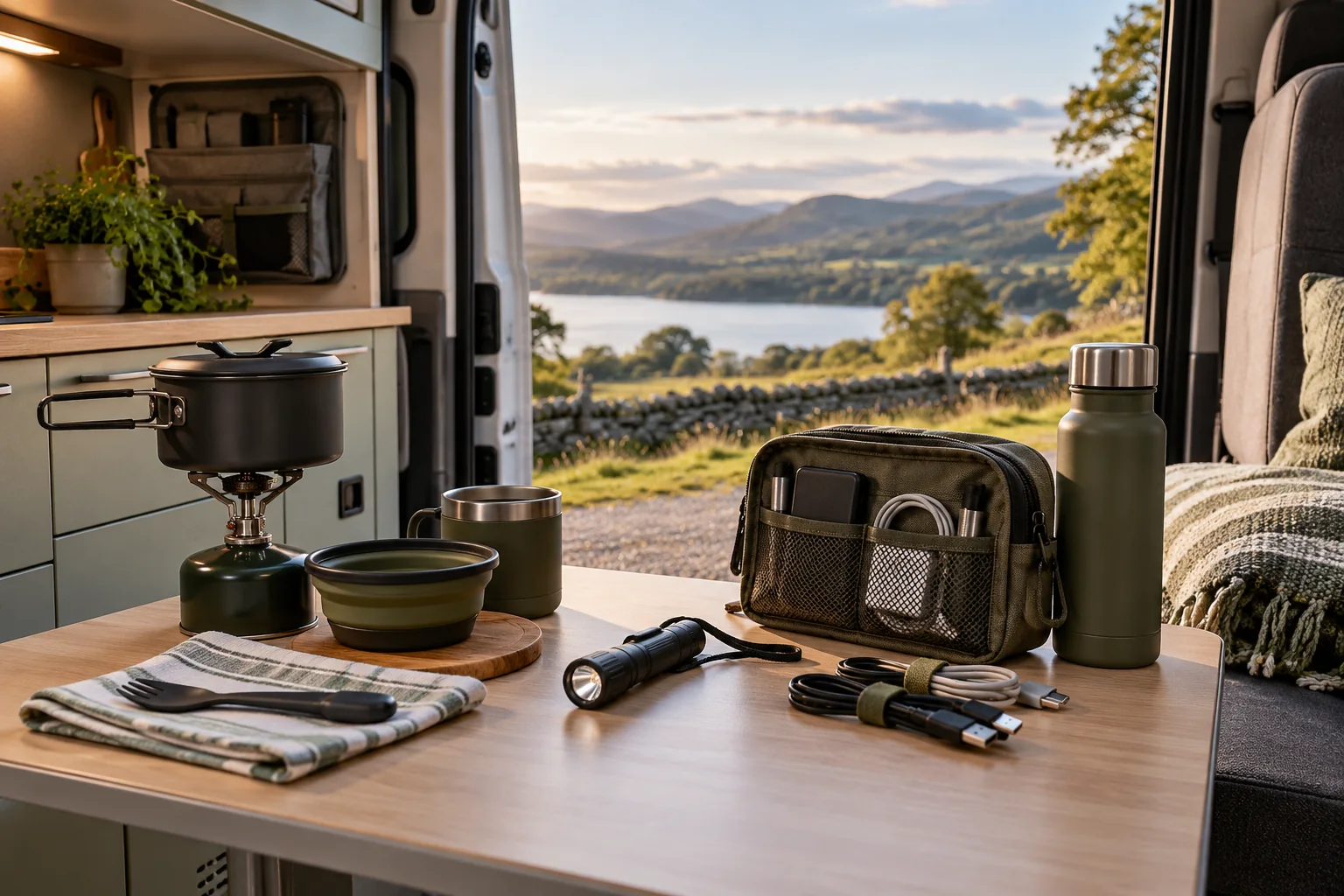
Campervans have a habit of filling themselves.
Start looking at accessories and it quickly becomes easy to believe you need levelling ramps, outdoor kitchens, multiple chairs, specialist storage boxes, gadgets for every cupboard and enough equipment to survive a small expedition.
You probably don’t.
A better starting point is simple: take what solves a real problem, leave behind what merely looks useful, and add things only when experience tells you they are missing.
That keeps the van lighter, easier to organise and quicker to pack.
The essentials
These are the things worth sorting before worrying about accessories.
1. Safe drinking water
Have a reliable way to carry, fill and use fresh water, plus a simple method for keeping your water system clean.
Exactly how much water you carry will depend on the van, the trip and whether you are staying on campsites, but carrying unnecessary water also means carrying unnecessary weight.
2. A simple hook-up kit
If you use campsites with electric hook-up, carry the correct lead and adapters needed for the places you visit.
Check cables and connections regularly and avoid building a collection of electrical gadgets you don’t actually use.
3. Basic cooking equipment
You do not need a domestic kitchen in miniature.
For most trips, a small collection is enough:
- one good frying pan
- one saucepan
- a sharp knife
- chopping board
- basic utensils
- plates or bowls
- mugs and glasses
- cutlery
Add specialist cooking equipment only if you regularly use it.
4. Bedding that stays in the van
Keeping a dedicated set of bedding in the campervan removes one packing job every time you travel.
Aim for comfort without filling every cupboard with spare blankets and pillows.
5. Basic cleaning kit
A small cleaning kit is usually enough:
- cloths
- washing-up liquid
- small brush or dustpan
- bin bags
- toilet and bathroom products appropriate to your van
Large collections of household cleaning products generally add weight and clutter without improving the trip.
6. A practical toolkit
You are not trying to carry a workshop.
A compact toolkit for simple jobs can be useful, together with any tools specifically required for equipment fitted to your van.
Think basic adjustments and minor fixes rather than roadside rebuilding.
7. Torch or portable light
A small rechargeable torch or light is one of those simple items that repeatedly proves useful, particularly when arriving after dark or checking something outside the van.
8. First-aid kit
Carry a suitable first-aid kit and check it occasionally rather than leaving it forgotten in a cupboard for years.
9. The things your particular van actually needs
Every campervan is different.
Your genuine essentials may include items such as:
- levelling equipment
- water-hose adapters
- toilet chemicals
- gas-related equipment
- electrical adapters
- specific tools
The important distinction is that these should solve a known requirement of your van, not simply appear on somebody else’s essentials list.
Things that are useful — but not automatically essential
This is where lists often become expensive.
Outdoor furniture
Chairs and a table can be worthwhile if you regularly sit outside. Four chairs, several tables and a complete outdoor lounge may be less useful in a two-person campervan.
Levelling ramps
Useful if uneven pitches regularly bother you. Less important if you rarely need them.
Barbecue or outdoor cooking equipment
Worth the space if outdoor cooking is part of how you tour. Dead weight if it spends every trip in storage.
Extra electrical gadgets
Fans, heaters, coffee machines, air fryers and other appliances can all be useful.
But each one takes space, adds weight and places demands on the van’s electrical system.
Add them because you genuinely use them, not because they appear on a campervan accessory list.
Storage organisers
Organisation helps, but buying more containers can sometimes make the problem worse.
First remove what you don’t need. Then organise what remains.
Things you can probably leave at home
The exact list is personal, but these are common candidates:
- large quantities of spare clothing
- duplicate kitchen equipment
- full-size household cleaning products
- tools for jobs you couldn’t realistically repair yourself
- several versions of the same charging cable or adapter
- food for every possible eventuality
- equipment bought for a type of touring you rarely do
- accessories carried because they came with the van
None of these things is necessarily wrong. The question is whether it earns the space it occupies.
Weight matters
Carrying less isn’t only about tidiness.
Campervans have a maximum permitted weight, and everything you add — passengers, water, fuel, luggage, bikes and accessories — contributes towards it.
That means an item can be small enough to fit in a cupboard and still be part of a much bigger weight problem.
We’ll cover this properly in our Campervan payload explained simply guide.
The easiest way to build your own essentials list
Start with the minimum.
After each trip, ask three questions:
What did we use?
Keep it.
What did we carry but never touch?
Consider removing it.
What did we genuinely wish we’d brought?
Consider adding it.
After a few trips, your own list will be far more useful than somebody else’s fifty-item checklist.
The TouringSmarter rule
Before something earns permanent space in the van, ask:
Does it solve a problem we actually have often enough to justify its space and weight?
If the answer is no, leave it behind.
Less stuff usually means less packing, less searching, less weight and less clutter.
Which generally means more time doing what the campervan was bought for in the first place.
How this guide was prepared
This article provides general practical guidance rather than recommendations for specific products. TouringSmarter does not claim to have physically tested every type of equipment mentioned. Where future guides recommend specific products, we will state whether the recommendation is based on our own use, trusted sources, owner reports or manufacturer information.