
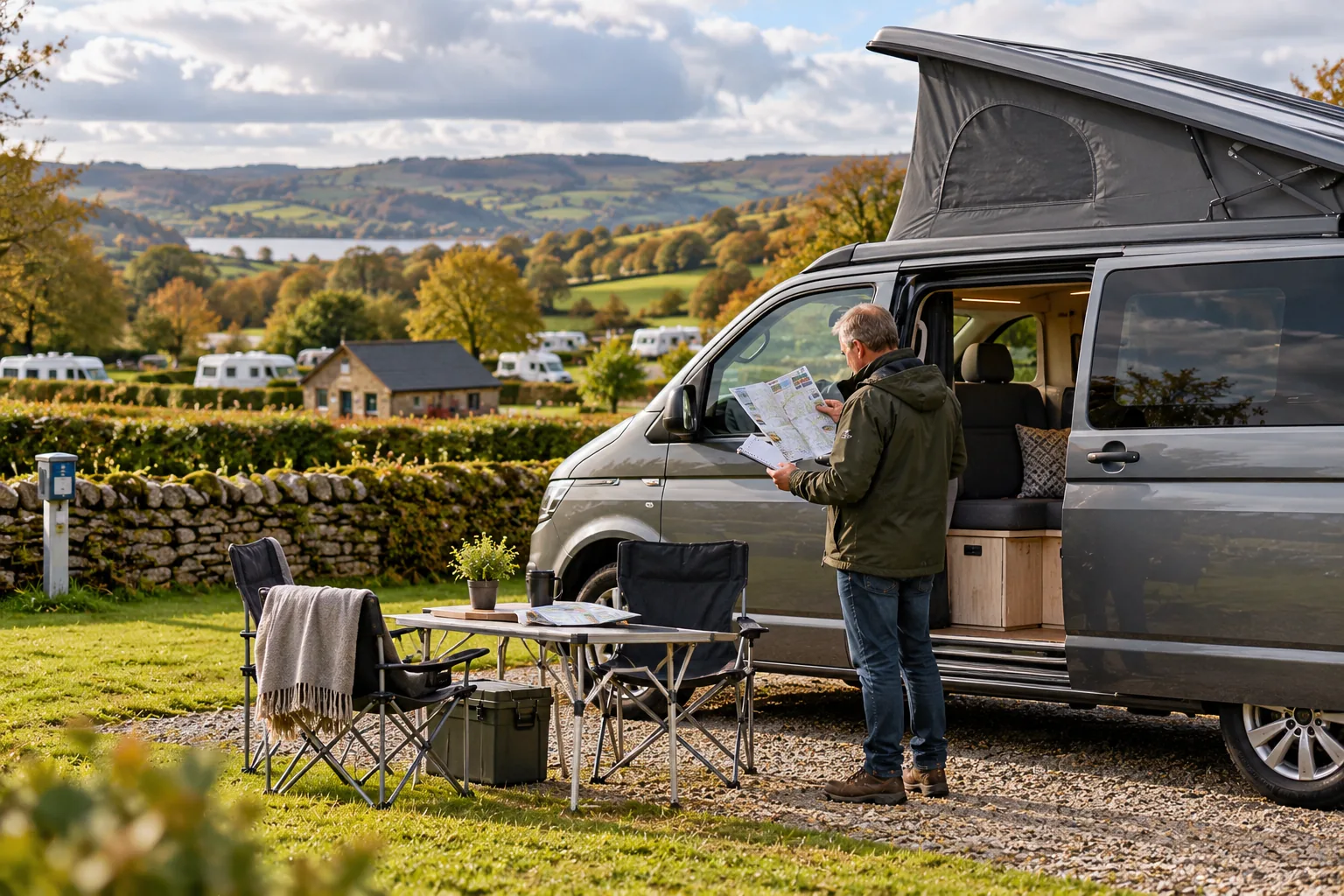
Your first campervan trip doesn’t need to be an adventure in troubleshooting. A few simple decisions before you leave can make the difference between an enjoyable weekend and spending half of it working out how everything operates.
The campervan is packed, the campsite is booked and you’re ready to go.
Then come the questions you didn’t think to ask. Where do you fill the water tank? Do you need electric hook-up? What happens when you arrive? And how do you avoid leaving something connected when it’s time to drive away?
The good news is that most first-trip problems are avoidable.
The quick answer: Keep your first trip short, choose a straightforward campsite with facilities, understand your van’s essential systems, and allow yourself plenty of time to settle in.
You don’t need to master every aspect of campervan touring before your first weekend.
1. Make the first trip easy
Don’t start with an ambitious itinerary
It’s tempting to plan a long trip with several stops. But your first outing is partly about learning how the campervan works.
A campsite relatively close to home is a sensible starting point.
Choose somewhere with accessible pitches, toilets, showers, water, waste disposal and electric hook-up if your vehicle needs it.
A two-night stay gives you time to learn without packing up almost as soon as you’ve arrived.
Check the campsite before travelling
Not all sites operate in the same way.
Before leaving, check:
- Your booking and pitch type.
- Arrival and departure times.
- Whether you need electric hook-up.
- Vehicle size restrictions.
- Access roads and any narrow approaches.
- Availability of fresh water and waste facilities.
- Site rules for dogs, barbecues and visitors, where relevant.
Don’t assume that arriving early is helpful. Many sites have set arrival windows to manage departures and avoid congestion.
TouringSmarter rule: For your first trip, choose an easy campsite rather than an impressive destination.
2. Understand the basics before leaving
You don’t need to become a mechanic or electrician. But you should know how to operate the essential equipment fitted to your van.
Fresh water
Find the fresh-water filling point, understand how the pump operates and know whether your van has an onboard tank or portable water container.
Use appropriate drinking-water equipment and follow the manufacturer’s cleaning and hygiene guidance.
You may be able to fill up on arrival rather than travelling with a full tank. This can reduce unnecessary weight, but check that water will be available.
Waste water
Find out how grey water is collected and emptied.
Depending on your van, this may involve an onboard tank or portable container.
Only dispose of waste water at facilities designated for that purpose.
Toilet facilities
If your campervan has a cassette toilet, find out how it works before your trip.
Know where the cassette is removed and where the campsite’s designated chemical toilet disposal point is located.
Follow your toilet manufacturer’s instructions for suitable chemicals and cleaning.
Heating and cooking
Understand the controls for any fitted heating or cooking systems.
Check the gas installation and safety equipment in accordance with the vehicle and appliance instructions. Never use outdoor cooking equipment or barbecues inside the campervan.
Make sure you understand ventilation and carbon monoxide precautions.
TouringSmarter rule: Familiarise yourself with the van at home, where mistakes are easier to correct.
3. What happens when you arrive?
There’s no need to rush.
Different campsites have different check-in procedures. Follow the site’s arrival instructions and ask staff if anything is unclear.
When you reach your allocated pitch:
- Check its layout and any site requirements before positioning the vehicle.
- Park within the designated pitch boundaries.
- Check the ground and whether levelling is necessary.
- Secure the parked vehicle appropriately.
- Set up water, electricity and other services according to the relevant instructions.
- Arrange outdoor furniture only after the important jobs are finished.
Don’t feel obliged to get everything perfect immediately.
Getting the van level
An uneven pitch can make sleeping uncomfortable and affect some equipment.
If your vehicle requires levelling, use suitable ramps or a manufacturer-approved levelling system, following the relevant instructions.
Never improvise with unstable blocks or unsuitable materials.
Make sure the parked vehicle remains secure.
4. Electric hook-up isn’t quite like plugging in at home
An electric hook-up can be useful, particularly if your campervan needs mains electricity for some appliances.
But campsite supplies have limits. You cannot necessarily run every high-power appliance at once.
Use a suitable outdoor hook-up cable and follow the campervan manufacturer’s instructions.
For a typical suitable motorhome installation, Camping and Caravanning Club guidance explains connecting the cable to the vehicle before connecting it to the campsite supply bollard. To disconnect, Caravan and Motorhome Club guidance gives the reverse order: unplug from the site supply first, then from the vehicle.
Fully uncoil the cable and keep electrical connections dry and protected.
Do not improvise adapters or attempt electrical repairs without the necessary competence.
If you’re uncertain, ask the site staff or a qualified professional.
TouringSmarter rule: Understand what your electrical system can supply before adding more appliances.
5. Don’t unpack everything
A common first-trip mistake is treating the campervan like a small house that needs to be completely set up.
You may discover that getting every chair, table and accessory out takes longer than expected, especially if you’re moving sites frequently.
Start with what you need.
Keep bags and equipment organised, and avoid blocking doors, escape routes or access to important vehicle controls.
If something stays in its cupboard for the whole weekend, consider whether it needs to travel next time.
This is one reason to build your kit gradually rather than buying every recommended accessory before your first trip.
6. Your first evening: keep it simple
Plan an easy meal or eat locally.
You don’t need a complicated cooking session while you’re still learning where everything lives.
Check that you have comfortable bedding, enough drinking water, suitable lighting and whatever you need for the overnight temperature.
Know where the campsite toilets and emergency contact information are located.
If you’re unfamiliar with your heating, cooking or electrical equipment, consult the instructions rather than experimenting.
Then enjoy being there.
The first evening should feel like the beginning of a break, not the continuation of a working day.
7. The morning routine
Campervan touring becomes easier when you develop a few simple habits.
In the morning:
- Check fresh-water and waste levels.
- Put damp items somewhere appropriate to dry.
- Return equipment to its usual storage place.
- Keep the living area clear.
- Check the weather before deciding what to do.
If you’re staying another night, there’s no need to pack everything away.
If you’re moving on, allow time for departure checks rather than rushing to meet the next booking.
8. The departure check matters more than you think
Leaving a campsite involves more than closing the doors.
Every campervan has different equipment, so use the manufacturer’s departure procedure.
A useful reminder is to check:
- Electric hook-up disconnected and safely stowed.
- Water and waste arrangements completed.
- Awning retracted and secured.
- Gas appliances and supplies secured as instructed.
- Windows, rooflights, doors and pop-top roof secured for travel.
- Levelling ramps, chocks and outdoor furniture collected.
- Cupboards, loose items and internal equipment secured.
- Seats and seatbelts correctly arranged for travel.
- Nothing left underneath or behind the vehicle.
Before driving away, walk around the entire van.
TouringSmarter rule: Always do the final walk-around. Experience doesn’t make it unnecessary.
9. Five things we’d avoid on a first trip
1. Travelling too far
A shorter journey gives you more time to enjoy the campsite and learn the vehicle.
2. Buying everything beforehand
You won’t know what genuinely suits your touring style until you’ve used the van.
3. Overloading the vehicle
Passengers, luggage, water and accessories all contribute to weight. Stay within the vehicle and axle limits.
4. Arriving tired or in the dark
Where possible, arrange enough daylight to get settled, especially on your first trip.
5. Trying to do everything perfectly
There will probably be something you forget or discover could work better. That’s normal.
The point of the first trip is to enjoy the experience and learn enough to make the next one easier.
10. What to do when you get home
Before unpacking everything, ask three questions:
- What worked well?
- What caused unnecessary frustration?
- What would genuinely improve the next trip?
Write down the answers.
You may discover that a storage change would help more than an expensive accessory, or that you carried several things you never used.
This is how a campervan gradually becomes easier to live with.
TouringSmarter’s recommendation
Keep your first campervan trip straightforward.
Choose an accessible campsite, learn the basics, travel light and allow time to settle in.
A successful first trip isn’t the one where you cover the most miles. It’s the one that makes you want to go again.
Less stuff. Better touring.
Related TouringSmarter guides
- Campervan essentials: what you really need before your first trip.
- The campervan gear list: what earns its space.
- Campervan payload explained: how much weight can you actually carry?
- Campervan storage: how to make a small space work harder.
Further reading
- Camping and Caravanning Club: Useful checklists for motorhomes and campervans
- Camping and Caravanning Club: Campsite arrival guide
- Camping and Caravanning Club: Electricity
Editorial note: This is a researched guide drawing on recognised UK camping and touring sources. It does not claim that TouringSmarter has personally tested every item or campsite procedure. Always follow your vehicle’s instructions and the rules of the site you’re visiting.
Reviewed: 8 October 2026.